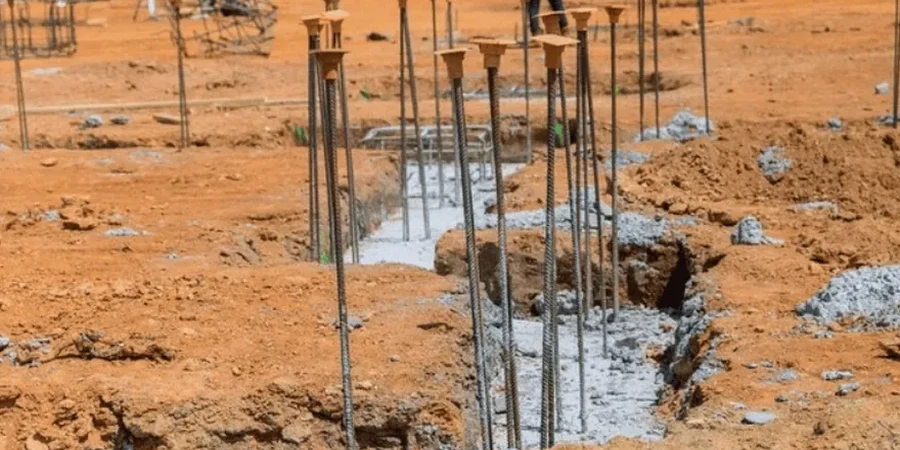
The design and construction of foundations in Bournemouth require a thorough understanding of its coastal geology, predominantly composed of Quaternary superficial deposits including soft alluvial clays, fine sands, and occasional peat lenses overlying the solid geology of the London Clay Formation and the underlying Upper Greensand. These variable ground conditions present significant technical challenges, notably high groundwater levels influenced by tidal fluctuations, differential settlement risks, and potential for erosion near coastal cliffs. Geotechnical engineers must carefully evaluate soil stiffness and bearing capacity, often employing cone penetration tests (CPT) and standard penetration tests (SPT) aligned with BS 1377 and ISO 22476‑2 respectively to characterize stratum behaviour and define design parameters for shallow and deep foundation solutions.
Local methods in Bournemouth typically adhere to British Standards, particularly BS 8004 and the Eurocode 7 suite (BS EN 1997‑1 and ‑2) for geotechnical design, supplemented by the UK National Annex. Site investigations follow the guidance of BS 5930 for soil description and the CIRIA Report C760 for groundwater control. Shallow foundations, such as strip footings and rafts, are common for low‑rise residential developments where competent sand or gravel strata are encountered within 2–3 metres of the surface; however, careful attention to frost heave and seasonal moisture changes is mandatory due to the presence of cohesive soils with moderate plasticity indices.
For heavier commercial structures or where soft clays and organic layers extend to greater depths, deep foundation systems like driven precast concrete piles or continuous flight auger (CFA) piles are frequently specified. Design verification often relies on static load tests per BS 1377 or ISO 12715, complemented by dynamic testing methods such as the Pile Dynamics Analyzer (PDA). Pile capacities are derived from local track record calibrated with borehole data, using methods like the Broms or Mayne approach for undrained shear strength in cohesive strata, ensuring compliance with EN 1997‑1's ultimate limit state and serviceability limit state requirements for vertical and lateral loading.
Applications in Bournemouth extend from residential extensions to multi‑storey apartment blocks along the seafront and inland regeneration projects. A typical case involves a three‑storey building on alluvial clay underlain by a firm to stiff London Clay layer. Here, a raft foundation may prove uneconomical due to anticipated settlements exceeding 25 mm, prompting a design switch to 20‑m long CFA piles socketed into the Greensand. Another common scenario is a two‑storey detached house on loose sand with a high water table; here, a shallow trench fill foundation with drainage blankets and waterproof membranes is adopted to mitigate capillary rise and erosion.
Given Bournemouth’s coastal setting and variable ground conditions, recommendations emphasise comprehensive ground investigation to at least 5 m depth including groundwater monitoring over a full tidal cycle. Soakaway tests per BRE Digest 365 should be performed for drainage designs. For any foundation work near cliffs, a marine geotechnical assessment is essential to evaluate long‑term coastal erosion impacts. The use of vibro‑compaction or stone columns may improve shallow bearing capacity in loose sands, while soil‑structure interaction analyses using finite element software are advised for large, sensitive developments to manage differential settlements and comply with Eurocode 7’s observational method.
In summary, successful foundation engineering in Bournemouth demands integration of robust site investigation data, rigorous application of ASTM/ISO/British Standards, and locally calibrated design approaches. Engineers must account for high groundwater, variable compaction densities, and potential for organic decomposition. By prioritising thorough testing, proper drainage provisions, and selecting appropriate foundation types—whether shallow footings for light loads or deep piles for heavier structures—the risks of excessive settlement, heave, or instability are effectively managed, ensuring long‑term performance and safety in this unique coastal environment.
Available services
This service complements our laboratory testing work for a complete project analysis.