In Bournemouth’s dynamic coastal and urban landscape, the Slopes & Walls category encompasses the full spectrum of geotechnical engineering solutions required to stabilise natural and man-made earth structures. From retaining walls that hold back tonnes of soil to reinforced slopes that prevent landslides, these interventions are critical for safeguarding property, infrastructure, and lives. The town’s unique position along the Jurassic Coast means that many developments sit on or near sloping ground, making specialist input not just advisable but often mandatory. Whether you are planning a residential extension on a hillside plot or a commercial basement excavation, understanding how slopes and walls interact with the ground is the first step toward a durable and compliant project.
Bournemouth’s geology plays a defining role in how slopes behave and why walls fail if not properly designed. Much of the area is underlain by the sedimentary strata of the Eocene Bracklesham Group and the overlying Pleistocene gravels and sands, which are prone to erosion and variable bearing capacity. The coastal cliffs, particularly east of the town centre, exhibit ongoing retreat due to marine action and groundwater seepage, creating a constant demand for slope stability analysis. Inland, the river valleys cut through layers of sand and clay that can become unstable when saturated, especially after prolonged rainfall. These conditions demand a thorough understanding of pore water pressures, soil shear strength, and the long-term performance of retaining structures, all of which fall squarely within this category.
The regulatory framework governing slopes and walls in the UK is robust, and Bournemouth projects must comply with several key standards. The primary document is Eurocode 7 (BS EN 1997), which sets out the principles for geotechnical design, including ultimate and serviceability limit states. This is supplemented by BS 8002 for earth retaining structures and BS 8081 for ground anchorages, both of which deliver detailed guidance on design life, drainage, and corrosion protection. The Building Regulations 2010, particularly Part A (Structure), require that all retaining walls over 1.2 metres in height are designed by a competent engineer, and the Party Wall etc. Act 1996 may apply if you are excavating near a boundary. Local planning authorities also enforce the National Planning Policy Framework, which can mandate slope stability assessments for developments in designated risk zones, such as those identified by the British Geological Survey’s GeoSure data.
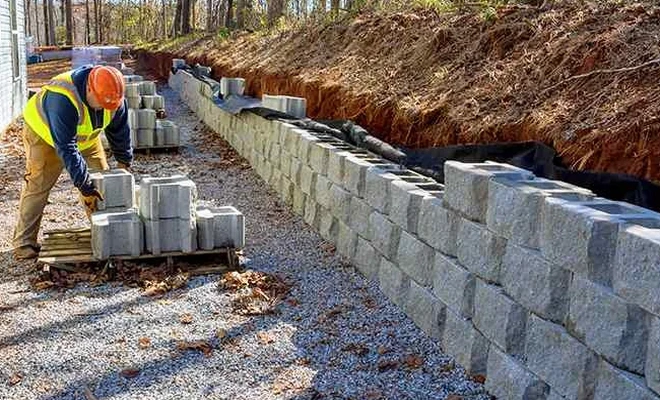
Projects that demand this category’s expertise range from small-scale garden terracing to major infrastructure works. A typical residential project might involve cutting back a slope to create a level rear garden, requiring a cantilevered or gravity retaining wall designed to resist lateral earth pressures. On a larger scale, highway widening along the A338 or coastal defence schemes often require mechanically stabilised earth walls or soil nailing to reinforce steep cuttings. Basement constructions in Bournemouth’s Victorian terraces, where space is at a premium, frequently need contiguous piled walls or secant piling to prevent groundwater ingress and ground movement. Each application demands a bespoke approach, combining structural engineering with a deep appreciation of local ground conditions, which is why early engagement with a geotechnical specialist is essential for identifying the most cost-effective and safe solution.
Available services
Common questions
What is the difference between a retaining wall and a slope stabilisation system?
A retaining wall is a rigid structure designed to hold back soil where a sudden change in elevation is needed, such as a basement or terrace. Slope stabilisation, by contrast, reinforces an existing slope in situ using techniques like soil nailing or geogrids to improve its natural resistance to failure. The choice depends on site geometry, available space, and the required design life.
When do I need planning permission for a retaining wall in Bournemouth?
Under permitted development, a retaining wall may not require planning permission if it is under 1 metre high and not adjacent to a highway, but Bournemouth, Christchurch and Poole Council may require approval if the wall exceeds 1.2 metres, is in a conservation area, or forms part of a larger engineering operation. Always check with the local planning authority before commencing work.
How do groundwater conditions affect slope stability in this region?
Groundwater is a primary trigger for slope failures in Bournemouth’s sandy and gravelly soils. Elevated pore water pressure reduces effective stress between soil particles, lowering shear strength. Prolonged rainfall can saturate the ground, leading to erosion or sudden slips, which is why proper drainage design, including weep holes and French drains, is integral to any retaining structure or slope remediation.
What are the warning signs that a slope or wall is becoming unstable?
Key indicators include fresh cracking in the ground or pavement behind the wall, tilting or bulging of the wall face, water seeping through joints, and unexpected settlement. On natural slopes, look for leaning trees, tension cracks at the crest, and saturated ground at the toe. Any of these signs warrants an immediate professional assessment to prevent progressive failure.