Ground improvement in Bournemouth encompasses a suite of geotechnical techniques designed to enhance the engineering properties of soils and fills, making them suitable for supporting structures, pavements, and infrastructure. In a coastal town built largely on challenging ground, the strategic modification of subsurface conditions is often more practical and sustainable than deep foundations or excavation and replacement. This category covers methods ranging from dynamic compaction and vibro techniques to chemical grouting and rigid inclusions, each selected based on soil type, loading requirements, and environmental constraints. For developments on loose sands prone to earthquake-induced settlement, vibrocompaction design (liquefaction) provides a reliable densification solution that mitigates the risk of ground failure.
Bournemouth's geology presents a complex mosaic that directly influences the need for ground improvement. The town sits on the Bournemouth Formation, comprising interbedded sands, silts, and clays of the Eocene Bracklesham Group, overlain in many areas by Quaternary river terrace gravels and head deposits. Valley bottoms and former heathland are frequently underlain by soft alluvium and organic soils with low bearing capacity and high compressibility. Crucially, much of the coastal plain features loose, saturated sandy deposits that can be susceptible to liquefaction under seismic loading, even from moderate UK seismicity. These conditions demand careful site investigation and often necessitate ground treatment to achieve the stiffness and strength required by modern construction standards.
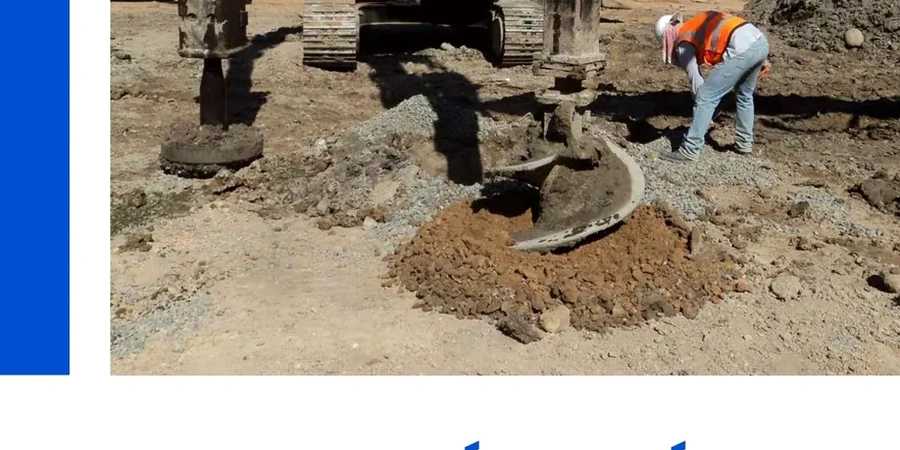
UK ground improvement practice is governed by a robust framework of standards and regulations that apply directly in Bournemouth. The primary design code is BS EN 1997-1:2004+A1:2013 (Eurocode 7: Geotechnical design – General rules), supplemented by its UK National Annex. Execution is covered by BS EN 14731:2005 (Execution of special geotechnical works – Ground treatment by deep vibration) and BS EN 12715:2020 for grouting works. All ground improvement must comply with the Construction (Design and Management) Regulations 2015, and where works encounter groundwater or discharge, an environmental permit from the Environment Agency may be required. The NHBC Standards Chapter 4.6 also provides specific guidance for ground improvement beneath residential developments, a common application in Bournemouth's expanding housing sector.
The types of projects requiring ground improvement in Bournemouth are diverse and growing. Residential developments on brownfield sites often encounter made ground and variable fills that demand treatment to limit total and differential settlements. Coastal defence works and promenade upgrades must resist erosion and wave action, frequently relying on improved ground to support retaining structures. Commercial and industrial buildings in the town centre and along the A338 corridor benefit from ground improvement to allow shallow foundations, avoiding the cost and programme impact of piling through granular soils. Infrastructure projects, including drainage attenuation tanks and highway embankments, also routinely specify ground improvement to ensure long-term performance and stability on the region's challenging sands and soft clays.
Available services
Common questions
What is ground improvement and when is it needed instead of piling?
Ground improvement is the controlled modification of soil properties to increase bearing capacity, reduce settlement, or mitigate liquefaction potential. It is typically preferred over piling when the competent stratum is at moderate depth, site access allows treatment rigs, and a uniform improved mass can support shallow foundations more economically. The choice depends on soil type, loading, and programme constraints.
Which ground conditions in Bournemouth most often require ground improvement?
Loose, saturated sands of the Bournemouth Formation and river terrace deposits are the most common targets, particularly where liquefaction assessment indicates risk. Soft alluvial clays and silts in valley bottoms, as well as uncompacted made ground on brownfield sites, also frequently require treatment to control settlement and deliver adequate bearing capacity for foundations and floor slabs.
What British Standards apply to ground improvement design and execution?
Design is governed by Eurocode 7 (BS EN 1997-1) with its UK National Annex. Execution standards include BS EN 14731 for deep vibration techniques and BS EN 12715 for grouting. The NHBC Standards Chapter 4.6 provides additional requirements for housing developments, and all works must comply with CDM 2015 regulations.
How does ground improvement mitigate liquefaction risk in coastal areas?
Techniques such as vibrocompaction densify loose granular soils by introducing vibratory energy, rearranging particles into a denser state that resists pore pressure build-up during seismic shaking. This increases the soil's cyclic resistance ratio, effectively reducing or eliminating the potential for liquefaction-induced settlement and loss of bearing capacity beneath structures.