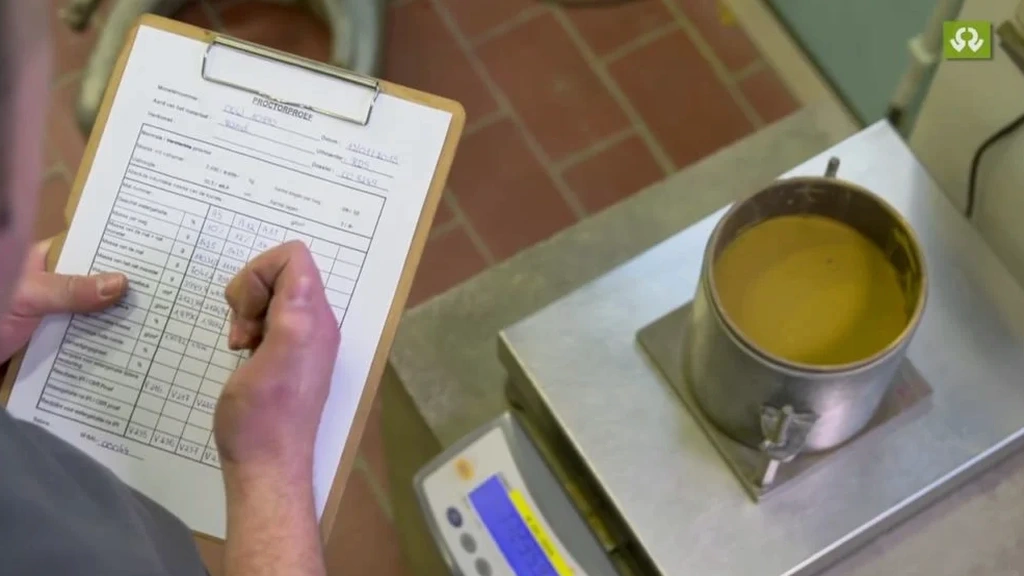
The mechanical rammer strikes the mould in precise, measured blows—either 2.5 kg dropping 300 mm for the standard effort, or 4.5 kg falling 450 mm for the modified procedure. Our laboratory team in Bournemouth runs these tests daily, compacting local Bagshot and Bracklesham bed materials to establish the moisture-density relationship that underpins every earthworks specification across the South Coast. Whether the fill originates from the sandy heathlands around Talbot Village or from excavations in the more cohesive London Clay outliers west of town, the Proctor curve tells you exactly where to target compaction effort for a stable, settlement-resistant platform. For larger sites where in-situ verification is required alongside the lab-derived reference density, we combine the Proctor with sand cone density testing to close the loop between specification and field performance.
A 2% deviation from optimum moisture content can halve the achieved dry density—small errors in the Proctor curve become large problems once the pavement is down.
Service characteristics in Bournemouth
Typical technical challenges in Bournemouth
Bournemouth’s expansion during the Victorian railway boom left a patchwork of made ground across the town centre and along the Wessex Way corridor—old brick rubble, ash, and reworked heathland soil that rarely appears on geological maps. When a developer encounters this material, the Proctor test becomes a diagnostic tool as much as a specification requirement: the shape of the compaction curve, the presence of double peaks, or an unusually flat dry-density response all flag fill that may contain variable organic content or hygroscopic debris. Ignoring those signals and applying a generic target density borrowed from a neighbouring site leads to differential settlement, cracked service trenches, and pavement deformation within the first wet winter. Our lab reports include interpreted commentary alongside the raw curve so the earthworks engineer can recognise these local anomalies before they become contractual disputes.
Our services
Our Bournemouth laboratory delivers the full Proctor testing package—from sample collection guidance through to interpreted compaction curves—supporting earthworks contractors, consulting engineers, and local authority projects across Dorset.
Standard Proctor (2.5 kg)
The baseline compaction reference for footpaths, garden landscaping, shallow service trenches, and lightly loaded fill. Suitable for fine- and medium-grained soils with limited oversize particles.
Modified Proctor (4.5 kg)
Simulates the energy input of modern vibratory rollers and heavy site plant. Specified for highway embankments, structural fill beneath foundations, and any engineered fill carrying traffic loading.
Proctor with CBR correlation suite
Combined compaction and California Bearing Ratio testing on the same moulded specimens, providing both the moisture-density relationship and the strength at target compaction levels—essential input for pavement design in Bournemouth's residential and commercial developments.
Common questions
What does a Proctor test actually tell me for my Bournemouth site?
It gives you two numbers—optimum moisture content and maximum dry density—that define the compaction target for your fill material. On Bournemouth's sandy heathland soils, hitting those numbers means you achieve a dense, stable platform that won't settle differentially under load or soften during wet winter months.
How much does a Proctor test cost, and how long does it take?
A standard or modified Proctor test typically costs between £80 and £170 depending on the material and whether additional correlations such as CBR are required. Standard turnaround is 2–3 working days from sample receipt; we can expedite results for urgent earthworks programmes.
Do I need the standard or modified version for a residential driveway?
For a domestic driveway with light vehicle loading, the standard 2.5 kg Proctor is usually adequate and aligns with typical local authority adoption requirements. However, if the driveway forms part of a larger development with adopted highway, the modified 4.5 kg test may be specified under Section 38 agreements—check with your consulting engineer.
Can you test material that already contains gravel or chalk fragments?
Yes. BS 1377-4 allows for oversize correction when particles larger than 20 mm (for the 1-litre mould) or 37.5 mm (for the CBR mould) are present. We follow the replacement method, substituting the retained fraction with an equal mass of material passing the appropriate sieve, and report the corrected density alongside the raw result.
How should I take and transport the sample to your Bournemouth lab?
Take a representative bulk sample of 15–20 kg from the stockpile or excavation face, seal it immediately in a heavy-duty polythene bag to preserve the natural moisture content, and label it clearly with the source location and depth. Samples can be dropped at our receiving point during working hours; we also arrange collection from sites within the Bournemouth-Christchurch-Poole conurbation.