Bournemouth’s coastal geology presents a unique set of challenges for pavement engineers. The town sits on a mix of Eocene sands and gravels, with pockets of soft alluvium near the River Stour and Christchurch Harbour. What really defines the local ground conditions, however, is the shallow water table. In many parts of town, groundwater sits less than two metres below the surface, saturating the subgrade and dramatically reducing its bearing capacity. A standard flexible pavement section simply won't hold up here without proper investigation and a design that accounts for moisture sensitivity. In our track record, the difference between a five-year pavement and a thirty-year pavement in Bournemouth comes down to how well you manage water at the formation level. We often combine our pavement design work with in-situ permeability testing to quantify drainage characteristics, and a CBR assessment to establish the actual strength of the saturated subgrade before selecting layer thicknesses.
In coastal Bournemouth, a pavement is only as good as the drainage layer beneath it. Get the water right, and the rest follows.
Service characteristics in Bournemouth
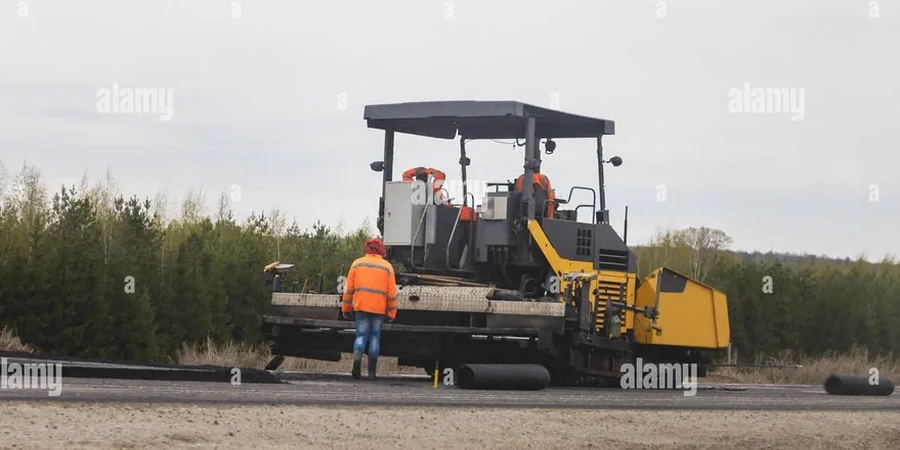
Typical technical challenges in Bournemouth
The most common failure we investigate in Bournemouth is alligator cracking and rutting on relatively new pavements, and the root cause is almost always water. The town’s geology includes the Branksome Sand Formation, a fine-to-medium grained sand that is highly susceptible to erosion when groundwater flows laterally beneath a pavement structure. We’ve seen car parks near the seafront where the sub-base has been completely washed out within three years of construction. This isn’t a design-life failure; it’s a drainage failure. A proper flexible pavement design in this environment must include a positive drainage system—either a French drain at the formation level or an open-graded sub-base that acts as a drainage blanket. In areas with very soft ground, we have also applied stone columns as a ground improvement technique beneath the pavement foundation to reduce post-construction settlement and deliver a stable working platform.
Our services
Our Bournemouth pavement design work covers the full lifecycle, from initial ground investigation through to construction validation testing. Each project is led by a chartered engineer, and all laboratory testing is performed in our UKAS-accredited facility.
DMRB Flexible Pavement Design
Full analytical design to CD 226 for residential roads, industrial yards, and main carriageways. We model fatigue and rutting life based on your actual traffic loading and subgrade conditions in Bournemouth.
Subgrade Assessment and CBR Testing
On-site CBR determination using dynamic cone penetrometer and laboratory soaked CBR to SHW Clause 631. Critical for the saturated sands found across the Bournemouth area.
Drainage Design for Pavement Foundations
Design of sub-surface drainage systems to protect the pavement structure from Bournemouth's high groundwater. Includes filter design, permeability assessment, and connection to surface water systems.
Forensic Pavement Investigation
When a pavement is cracking or rutting prematurely, we investigate the cause. Coring, deflection testing with a falling weight deflectometer, and laboratory analysis of bound and unbound layers.
Common questions
How much does a flexible pavement design for a Bournemouth development cost?
For a typical residential access road or small car park in Bournemouth, the design fee ranges from £1,140 to £4,620, depending on the traffic loading and the complexity of the ground conditions. A larger commercial scheme requiring a detailed analytical pavement model and full laboratory testing of imported fill will be at the upper end of that range.
What is the biggest design challenge for pavements in coastal Bournemouth?
Without question, it’s the combination of a shallow water table and the loose, poorly graded sands of the Branksome Sand Formation. The subgrade can go from reasonably stiff to near-zero strength with just a small rise in moisture content. This forces us to design solid capping layers and under-drainage that wouldn't be necessary just a few miles inland.
Do you provide a design certificate for adoption agreements?
Yes. We issue a formal design certificate signed by a Chartered Civil Engineer, suitable for Section 38 and Section 278 adoption agreements with BCP Council or for private roads built to adoptable standards. The certificate is backed by our UKAS-accredited test results and full design calculations to DMRB CD 226.